Engineered for the Abyss, Built to Last
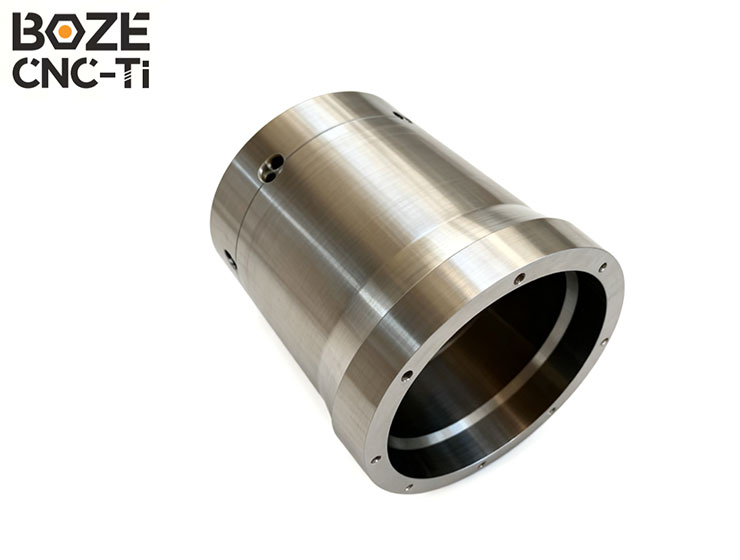
When your subsea mission descends into the "Midnight Zone," compromise is not an option. Our Grade 5 Titanium (Ti-6Al-4V) Battery Housings are precision-engineered to provide the perfect balance of high strength, lightweight performance, and absolute corrosion resistance for long-term subsea deployments.
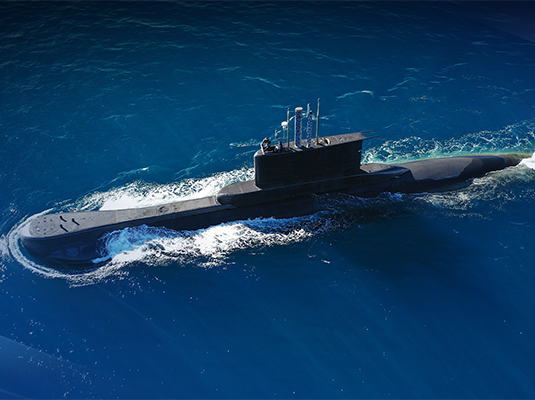
Whether you are powering an AUV (Autonomous Underwater Vehicle), ROV, or fixed oceanographic sensors, our housings ensure your energy source remains bone-dry and functional under thousands of meters of hydrostatic pressure.
Why Grade 5 Titanium?
In the harsh chemistry of saltwater, standard metals fail. Grade 5 Titanium is the industry gold standard for subsea engineering:
Superior Strength-to-Weight Ratio: With a tensile strength of over 895 MPa, Ti-6Al-4V is as strong as steel but 45% lighter, significantly improving the buoyancy and payload capacity of your underwater assets.
Immune to Seawater Corrosion: Titanium forms a stable, protective oxide layer instantly. It is virtually immune to pitting, crevice corrosion, and stress corrosion cracking in seawater.
Extreme Pressure Resistance: Designed to withstand depths of up to 6,000 meters (600 bar) and beyond, protecting sensitive lithium-ion cells from catastrophic failure.
Key Technical Specifications
| Feature | Specification |
| Material | Aerospace-Grade Titanium Ti-6Al-4V (Grade 5) |
| Quality testing: | Ultrasonic testing
Microstructure testing
100% dimension inspection. |
| Wall Thickness: | based on pressure rating |
| Tensile Strength: | 900–950 MPa |
| Yield Strength: | ≥ 880 MPa |
| Depth Rating | Customizable (Standard options: 1000m, 3000m, 6000m) |
| Seal Integrity | Dual O-ring radial seals (Viton/Nitrite) |
| Connectors | Pre-drilled for SubConn® or customized penetrators |
| Finish | Natural bead-blast or polished (for anti-biofouling) |
| Magnetic Signature | Non-magnetic (Ideal for sensitive sensor arrays) |
Key Product Benefits
1. Precision CNC Machining
Every housing is machined from solid titanium bar stock or forged rings to ensure zero structural voids. Our tolerances are kept within microns to guarantee a perfect seal every time.
2. Advanced Thermal Management
Despite its corrosion resistance, Grade 5 Titanium offers sufficient thermal conductivity to dissipate heat generated by high-discharge battery packs, preventing thermal runaway in enclosed environments.
3. Modular & Customizable Design
We don't believe in "one size fits all." We offer:
Custom lengths and diameters to fit your specific cell configurations.
Internal mounting chassis for secure battery placement.
End-cap customization for switches, LEDs, or specialized sensors.
Applications
Deep-Sea Exploration: Powering heavy-duty ROVs in oil and gas inspections.
Marine Research: Long-term deployment of bottom-mounted observatories.
Defense & Security: Low-signature power pods for covert underwater surveillance.
Renewable Energy: Battery storage for tidal and wave energy converters.
The potential challenges
Higher cost : Titanium alloy raw materials and processing costs are higher than stainless steel or regular alloys, but its long life and reliability can reduce the total cost of ownership.
Difficult to process : professional equipment and technology are needed for welding and machining, but mature processes (such as inert gas shielded welding) can be solved.
FAQ
Q1: Why choose Grade 5 Titanium over 316L Stainless Steel for subsea housings?
A: While 316L is common, Grade 5 Titanium (Ti-6Al-4V) offers three critical advantages:
Strength-to-Weight: Titanium is nearly 45% lighter than steel for the same strength, which is vital for maintaining buoyancy in AUVs.
Corrosion Life: Unlike stainless steel, Grade 5 Titanium is immune to pitting and crevice corrosion in stagnant seawater, eliminating the need for sacrificial anodes or frequent maintenance.
Fatigue Resistance: It performs significantly better under the cyclic pressure loading found in deep-sea deployments.
Q2: What is the maximum depth rating for your titanium battery housings?
A: Our standard designs are rated for 3,000m and 6,000m. However, using finite element analysis (FEA), we can custom-engineer housings for full ocean depth (11,000m) by optimizing wall thickness and end-cap geometry to withstand pressures exceeding 1,100 bar.
Q3: How do you ensure the sealing integrity of the housing?
A: We utilize a redundant dual O-ring sealing system (radial or axial). Depending on the deployment environment, we offer Viton (FKM) or Nitrile (NBR) seals. Every unit undergoes hydrostatic pressure testing to 1.25x its rated depth before shipment to ensure zero-leak performance.
Q4: Is Grade 5 Titanium non-magnetic?
A: Yes. Grade 5 Titanium is paramagnetic (practically non-magnetic). This makes it the ideal material for battery housings positioned near sensitive magnetometers, compasses, or scientific sensors where magnetic interference from a steel housing would compromise data accuracy.
Q5: Can these housings be customized for specific connectors?
A: Absolutely. Our CNC machining process allows for precision porting on end caps. We frequently pre-machine interfaces for SubConn®, Seacon, or Teledyne Marine connectors. We can also provide custom mounting brackets and internal chassis for your specific battery cell configurations.
Q6: How does titanium handle the heat generated by the batteries?
A: While titanium has lower thermal conductivity than aluminum, it is sufficient for most subsea battery applications. The surrounding seawater acts as an infinite heat sink. For high-discharge applications, we can design internal thermal bridges to facilitate heat transfer from the cells to the titanium shell.