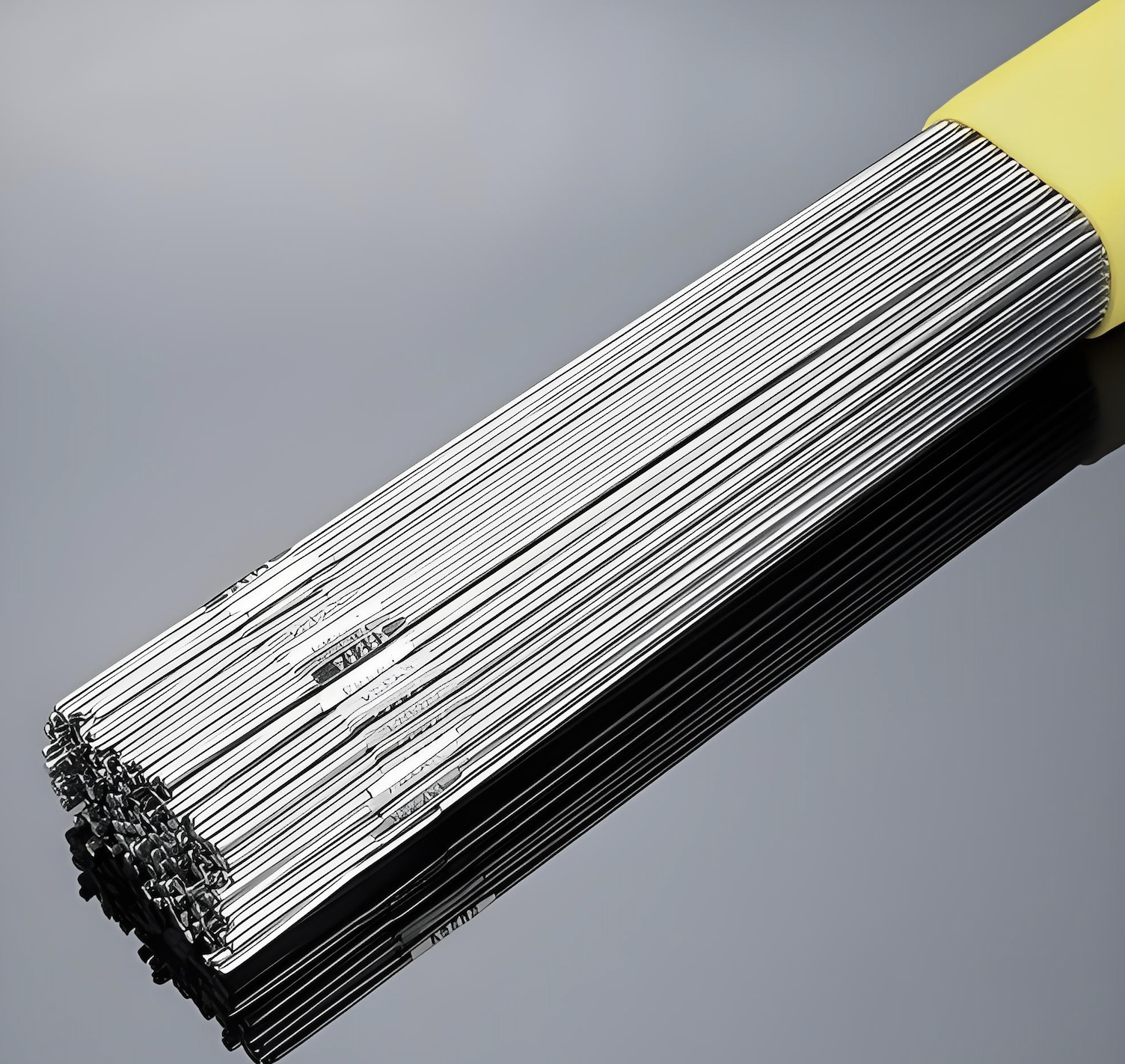
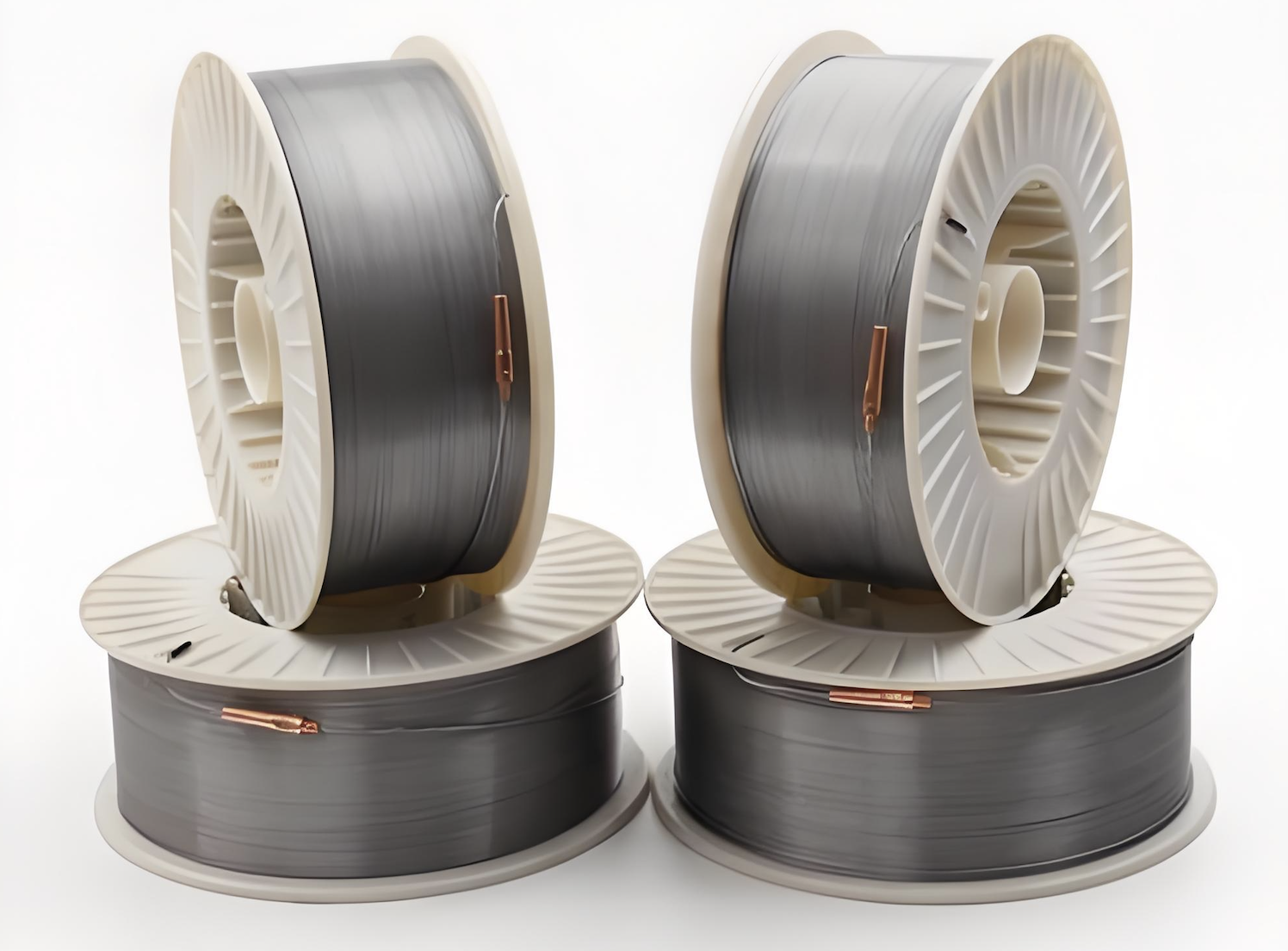
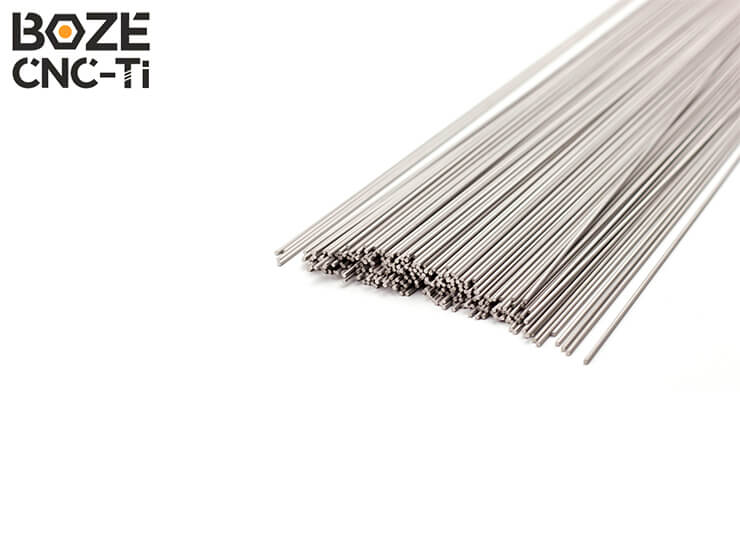
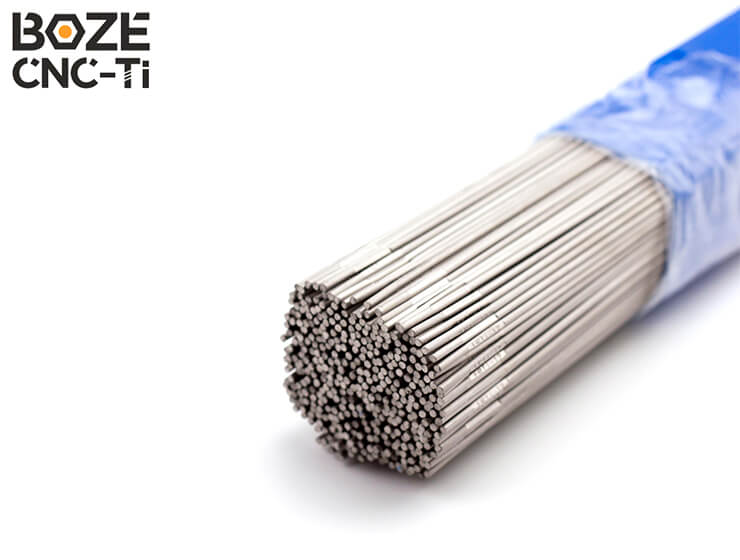
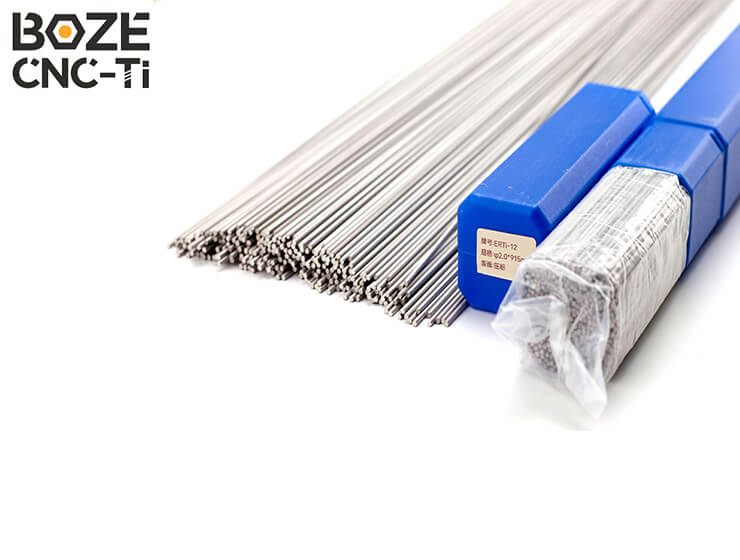
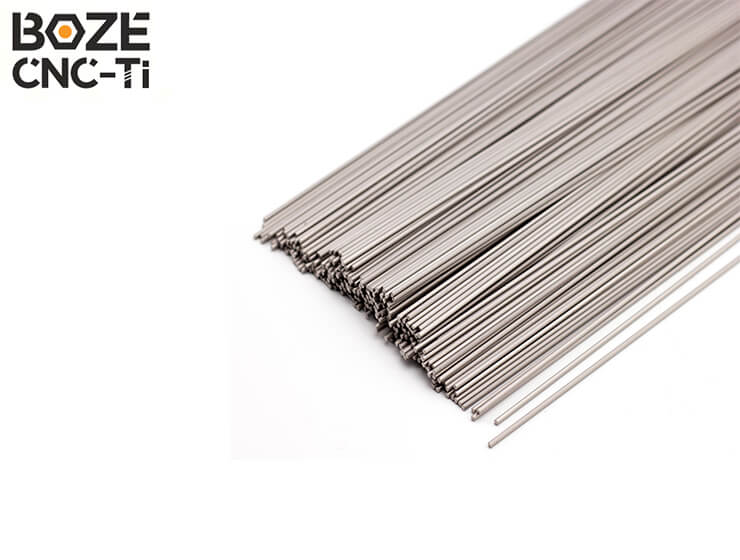
Our Titanium Welding Wire is engineered for critical welding applications where joint integrity and corrosion resistance are non-negotiable. Whether you are fabricating chemical pressure vessels, heat exchangers, or aerospace components, our filler wires provide the purity and consistency required for defect-free welds.
Available in Straight Rods (TIG) and Spools (MIG), each batch is vacuum-packed to ensure zero atmospheric contamination.
Key Features
1.Ultra-Clean Surface: Multi-stage ultrasonic cleaning removes all surface residues, preventing porosity and weld embrittlement.
2.Precise Alloy Chemistry: Strict control of Interstitial Elements (O, H, N, C) according to AWS A5.16 standards for superior ductility.
3.Excellent Weldability: Stable arc characteristics with minimal spatter, ensuring a smooth, silver-bright weld bead.
4.Chemical Industry Ready: Specialized Grade 7 (Ti-Pd) and Grade 12 wires available for extreme acid and chloride resistance.
5.Traceability: 100% PMI tested. Every shipment is accompanied by a 3.1 Material Test Certificate (MTC).
Technical Specification
Feature | Specification |
Material | ERTi-1, ERTi-2 (CP), ERTi-5 (Ti-6Al-4V), ERTi-7 (Ti-Pd) |
Dimension | 0.5mm – 5.0mm (0.020" – 0.187") |
Standard | AWS A5.16, ASTM B863, SFA 5.16 |
| Forms | TIG Rods (1000mm length) / MIG Spools (D300, D600) |
Processing | Forging/Rolling |
Surface | Bright, Chemically Cleaned / Pickled |
Condition | Annealing |
Application | Aerospace/Industrial/Oil & Gas/Medical/Defense |
Chemical Processing Applications
1.Pressure Vessels: Ensuring leak-proof seams in titanium reactors and storage tanks.
2.Pipe Welding: Reliable joints for seawater cooling systems and brine transport pipes.
3.Anode Fabrication: Used in the welding of titanium mesh for the chlor-alkali industry.
4.Repair & Maintenance: High-quality filler rods for onsite industrial equipment refurbishment.
Quality Assurance
"We don't just sell wire; we sell weld integrity."
Our QC laboratory performs:
1.Chemical Analysis: Verification of alloy composition and gas levels.
2.Tensile Testing: Ensuring the mechanical properties meet project demands.
3.Bend Testing: To confirm the ductility and lack of impurities in the weld metal.
FAQ: Expert Insights on Titanium Welding Wire for Chemical Applications
Q1: How do you ensure the purity of the welding wire to prevent weld embrittlement?
A: Titanium is highly reactive to oxygen and nitrogen. Our welding wires (ERTi-2/ERTi-7) undergo a strict multi-stage ultrasonic cleaning process to remove all surface lubricants and oxides. Every batch is vacuum-packed to ensure "zero-contamination" until the moment you start welding.
Q2: Which grade of welding wire should I use for a Grade 7 (Ti-Pd) chemical reactor?
A: To maintain the corrosion resistance of the weld seam, you should use ERTi-7 welding wire. Using a standard ERTi-2 wire on Grade 7 base metal will create a "weak spot" where crevice corrosion will occur first. We always recommend matching the wire chemistry to the base material's palladium content.
Q3: Does your titanium welding wire meet AWS A5.16 standards?
A: Yes. All our products comply with AWS A5.16 / ASME SFA-5.16. We provide a complete MTC (Material Test Certificate) including a full chemical composition analysis (H, O, N, C, and Fe levels) to ensure the weld remains ductile and crack-resistant.
Q4: How do I avoid "Blue Welds" when using your filler rods?
A: Blue or straw-colored welds indicate atmospheric contamination. While our wire is of the highest purity, we recommend using a trailing shield and ensuring 99.999% pure Argon gas coverage. Our wire's smooth surface finish helps maintain a stable arc, reducing the risk of turbulence-induced oxidation.
Q5: What diameters do you offer for TIG and MIG welding?
A: We provide standard diameters from 1.0mm to 4.0mm. For TIG welding, we supply 1000mm straight rods; for automated MIG welding, we offer precision-wound spools (D300/D600) to ensure smooth wire feeding without bird-nesting.